Megatrend · Biotech & Genomic Medicine
Selling shovels in a gold rush — you don't have to guess which drug wins
Every drug company in the world buys its instruments, sends out its tests, and outsources its manufacturing to roughly the same handful of companies. Whether a given drug succeeds or flops, the people selling the "shovels and tools" get paid first, every time. This is a hidden layer sitting under the entire pharma industry — and right now, international politics is shaking it like never before.
01What "picks-and-shovels" means
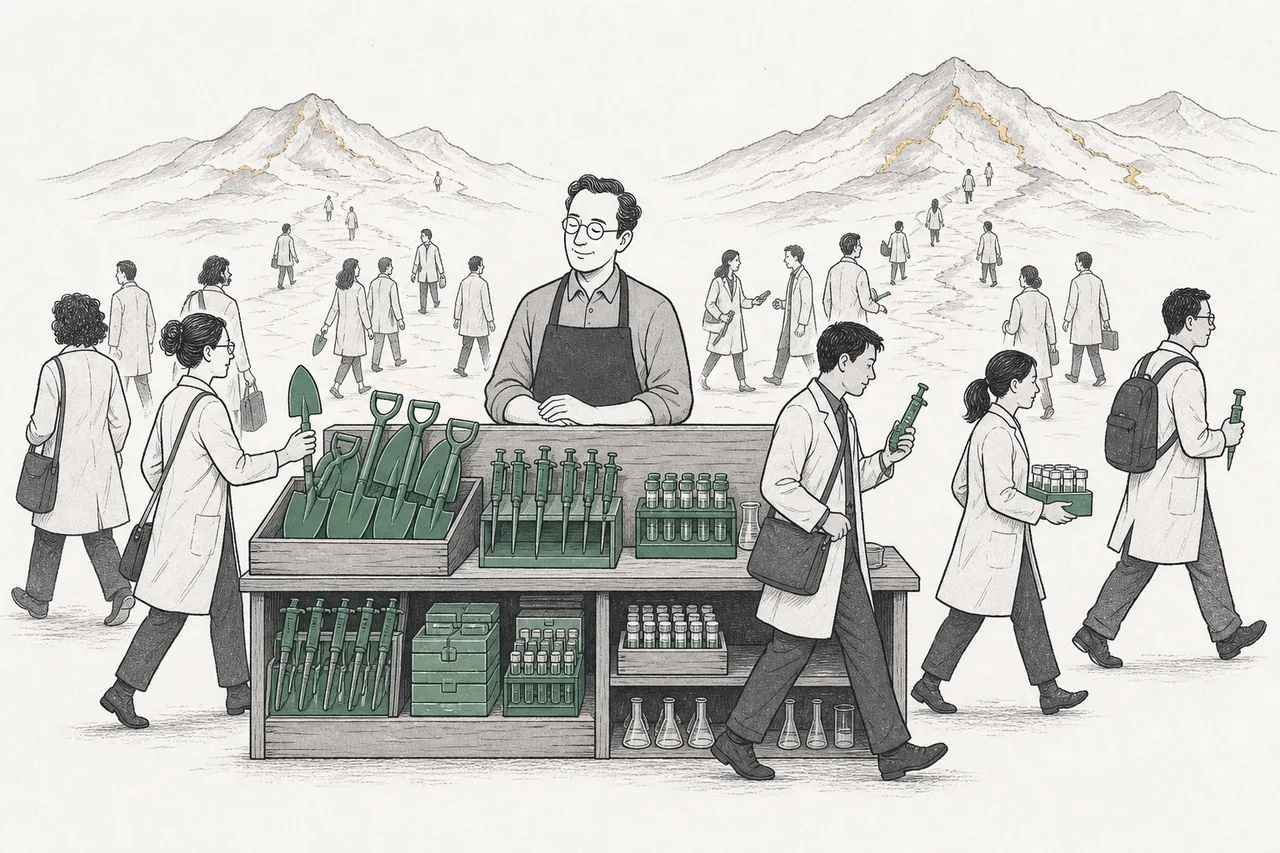
There's an old saying in investing: in a gold rush, the people who actually got rich weren't the ones digging for gold — they were the ones selling picks, jeans, and tools to every digger. Most diggers went home empty-handed. But everyone — those who struck gold and those who didn't — had to buy a shovel before they started. In pharma, that "shovel-selling" business is very real, and that's what this lesson is about.
Pharma is one of the riskiest businesses on earth. More than 90% of experimental drugs that enter human trials end up failing. Nobody knows in advance which cancer drug will make it, or which gene therapy will collapse. But no matter which drug wins, every company buys the same research instruments, sends samples to the same kind of labs, and when it's time to actually manufacture, usually hires the same set of factories. That's the "Tools, Diagnostics & CDMO" group — a business that sells to everyone in the industry without betting on any single drug.
An investing phrase for businesses that sell "tools and infrastructure" to a booming industry rather than competing in that industry themselves — like selling shovels to gold miners instead of mining yourself. The upside is lower risk and steadier revenue, because you earn from the total activity of the whole industry, not from gambling on which player wins.
On our megatrend map, this group is a sub-theme under Biotech & Genomic Medicine, classified in the "supply chain layer" — because it doesn't invent drugs itself. It's the infrastructure layer sitting beneath every drug, every treatment, every company. Sub-themes like gene editing or biosimilar drugs are the "gold miners" — and this group sells the tools to all of them.
02Why it's pharma's tollgate
Look at the numbers for Thermo Fisher Scientific, the biggest player in the group. In 2025 it brought in roughly $44.6 billion — more than several famous drug companies combined. And Thermo Fisher doesn't sell a single drug. It sells instruments, reagents, and services to everyone in the industry — from giant pharma firms to garage startups to universities around the world.
What makes this group so powerful is that it gets paid before the drug even has results. Drug companies pay for instruments and manufacturing from the research stage — long before they know whether the drug will pass its trials. While the drug company carries the 90% risk of failure, the picks-and-shovels group collects a toll on all the activity — from the drugs that succeed and the ones that flop.
And it's a huge, fast-growing market. The "life-science tools" market alone is worth about $196 billion in 2025, and is expected to grow to $460–540 billion by 2035 (roughly 10–12% a year). That's before you count the diagnostics and manufacturing markets, which are of similar scale.
Here's why so many investors like this group: it's effectively a "tax on biotech". Every medical advance, every competition, every wave of innovation — gene therapy, next-gen cancer drugs, mRNA vaccines — all of it turns into orders flowing back to the picks-and-shovels group.
03The three legs holding up this business
This group isn't one block — it's three legs that run all the way along a drug's journey, from the lab to the production line. Picture a "drug-development conveyor belt" and watch where each leg steps in to collect its toll.
Leg 1 — research instruments and genome sequencing. This is the industry's "hardware store," from analyzers and reagents to the sequencing machines that read DNA. The market leaders sit in Life-Science Tools & Sequencing, with Thermo Fisher, Danaher, Agilent, and Illumina out front. The charm of this business is the "razor-and-blade" model — you sell the machine once, but you keep selling the reagents it needs over and over. The clearest example is Illumina, which pushed the cost of sequencing one human genome down to about $200 (from millions of dollars two decades ago) — the cheaper it gets, the more people sequence, and the more reagent sales soar.
A business model that sells the "hardware" (the razor) cheap or at thin margins to lock customers in, then earns on the "consumables" (the blades) they have to keep refilling for the life of the machine — like a sequencing machine and its dedicated reagents. The steady, genuinely profitable revenue comes from the "blades," not the machine.
Leg 2 — diagnostics. This is the business of "finding disease," from hospital test kits to the molecular and genetic tests that tell you which drug a particular cancer patient should get. The market leaders sit in Diagnostics & Precision Testing, with Abbott, Roche, and Becton Dickinson out front. Its importance keeps growing, because many modern drugs come "paired" with a test — you have to test first to know who should get the drug. The global in-vitro diagnostics market is worth about $109 billion in 2025.
Leg 3 — CDMO and CRO (contract development, manufacturing, and research). This is the hottest leg, and the one with the most drama. Many drug companies today — especially small ones with a good drug but no factory — choose to "outsource" manufacturing and trials rather than build their own hugely expensive plants. On the manufacturing side, the market leaders sit in CDMO / Contract Manufacturing, with Lonza, Samsung Biologics, and WuXi out front. (CROs like IQVIA handle the research and trials separately.)
CDMO (Contract Development & Manufacturing Organization) = a company that "develops and manufactures" a drug to the spec a client sends, like Lonza, Samsung Biologics, or WuXi — think of it as the foundry of the drug world, "casting" drugs instead of chips · CRO (Contract Research Organization) = a company that runs "research and clinical trials" on contract, like IQVIA — designing and managing human drug trials on a drug company's behalf.
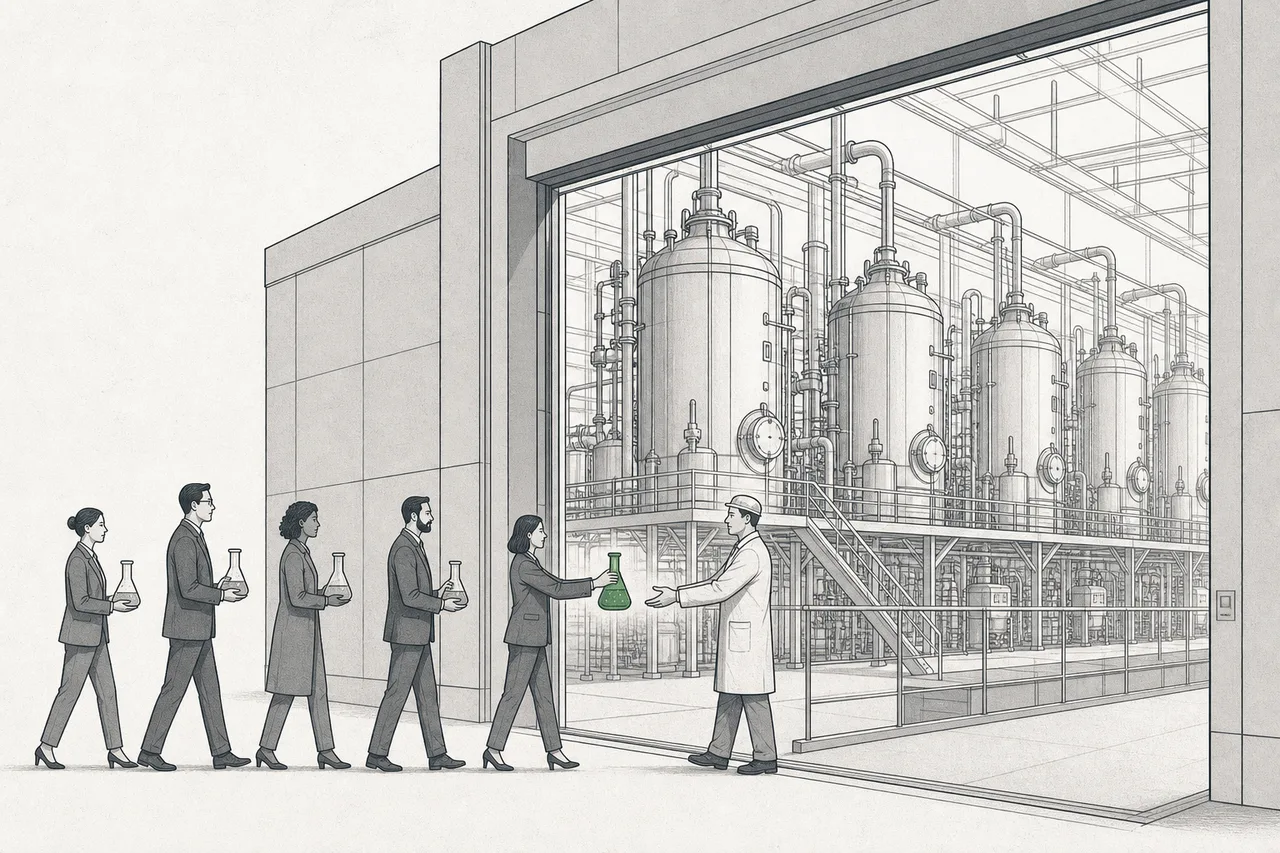
Why is outsourcing growing? Because a lot of modern drug innovation comes from small companies that can't afford to build a factory — plus biologics, which are hard to make and demand specialized expertise, so even giant pharma firms now hire the experts to do it for them. The global pharma CDMO market is worth about $174 billion in 2025 and is expected to grow to $369 billion by 2034.
04How it connects in the ecosystem
This group is the "floor" every sub-theme of Biotech stands on. Every time another sub-theme grows, the picks-and-shovels group grows with it — without ever having to bet on which drug works:
- Supplies Gene & Cell Editing: gene and cell therapies are the hardest things in the industry to manufacture. The small companies that invent them usually have no factory of their own, so they have to lean on specialized CDMOs — the more this sub-theme booms, the more demand for contract manufacturers soars
- A shadow of Biosimilars: many biosimilar makers are companies that are great at growing cells in fermentation tanks — exactly the same skill as a CDMO. So some firms, like the Samsung group, play both roles at once: contract manufacturer and biosimilar maker
- Leans more and more on AI: modern sequencing machines produce so much genetic data that AI is needed to analyze it, and precision testing relies on AI to read results. That's the thread linking this group directly to AI Drug Discovery
- Needs key raw materials and components: these high-tech instruments require electronic parts, lenses, and special materials — which makes this group as exposed to global supply-chain tensions as any other tech industry
05Where it stands now
2025–2026 is a period when this group is recovering from a post-COVID "slump" (drug companies over-stocked reagents and instruments, then needed time to work through the inventory). At the same time, the biggest political event in the history of contract manufacturing landed — a law called the BIOSECURE Act.
A US law that passed Congress and was signed into law in late 2025, barring US government agencies from contracting with companies that use "biotechnology companies of concern" — aimed mainly at Chinese contract manufacturers and research firms, especially WuXi AppTec and WuXi Biologics. The law gives a 5-year transition (through 2030) for drug companies to gradually move work away from Chinese manufacturers.
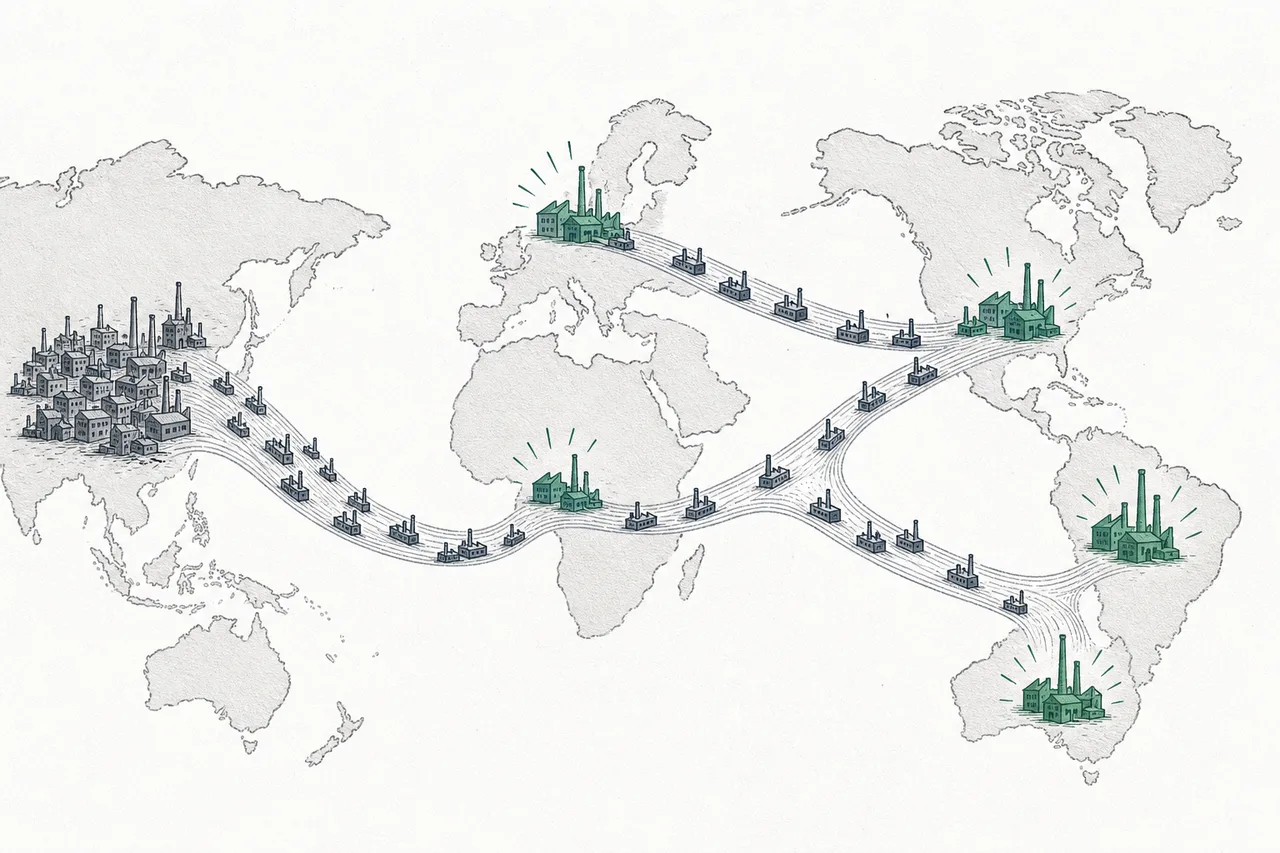
The result is a wave of "reshoring" — moving drug manufacturing back to the West and its allies. Even though no company had been officially listed by early 2026, many drug companies had already begun "diversifying" away from WuXi back in 2024–2025, producing what the industry calls the "de-facto BIOSECURE effect" — the impact that arrives ahead of the actual law. This reshoring wave is estimated to unlock around $25 billion in capacity-expansion investment.
The clear winners are Western and Korean CDMOs. In 2025, Lonza (Switzerland) posted sales above CHF 6.5 billion, up 21.7%, while Samsung Biologics (Korea) grew over 30% to ~$3.1 billion and climbed to the world's #3 CDMO. WuXi Biologics, meanwhile, is still growing (revenue +16.7%, gross margin up to 46%) but is starting to feel pressure as Western customers gradually move out.
On the other side, the instruments and diagnostics group has its own story. Danaher posted 2025 revenue of about $24.6 billion (back to growth after the inventory-destocking period), while CRO giant IQVIA brought in $16.3 billion — a sign that global drug-trial activity is still busy.
06The road ahead
The first direction is the clearest: the reshoring wave will redraw the world's drug-manufacturing map. Throughout the 2026–2030 transition period of the BIOSECURE Act, manufacturing work that used to sit in China will gradually move to plants in the US, Europe, and Korea. Players like Lonza, Samsung Biologics, and Fujifilm are racing to pour money into capacity expansion to absorb it — this is a multi-year investment cycle that's only just begun.
The second direction is that outsourcing will keep getting deeper and broader, because so much modern drug innovation comes from small companies with no factory — plus increasingly complex drugs (gene therapy, cell therapy) that demand specialized expertise. That pushes up the share of drugs that get "contract-manufactured" rather than made in-house. And as long as pharma R&D budgets keep growing (expected up about 4% in 2025 and ~7% in 2026), the demand flowing back to the picks-and-shovels group grows with it.
The third direction is the merge with AI and data. Modern instruments won't just sell "hardware" — they'll sell "instrument + software + data" as a package. Ever-cheaper sequencing will make precision medicine routine — and every extra test or sequence run is more reagent and service revenue for this group.
07Challenges & risks
Even as the "shovel seller" that looks safer than the gold miner, this group has its own specific risks you need to fully grasp.
The first risk is volatility tied to biotech's funding cycle. When interest rates are high and capital flows out of biotech startups (as happened in 2022–2024), many small companies have to slow down or cancel projects — which means orders for instruments, testing, and contract manufacturing shrink immediately. So this group isn't "completely safe" the way the picks-and-shovels image suggests. It's still tied to the "financial health" of the whole industry.
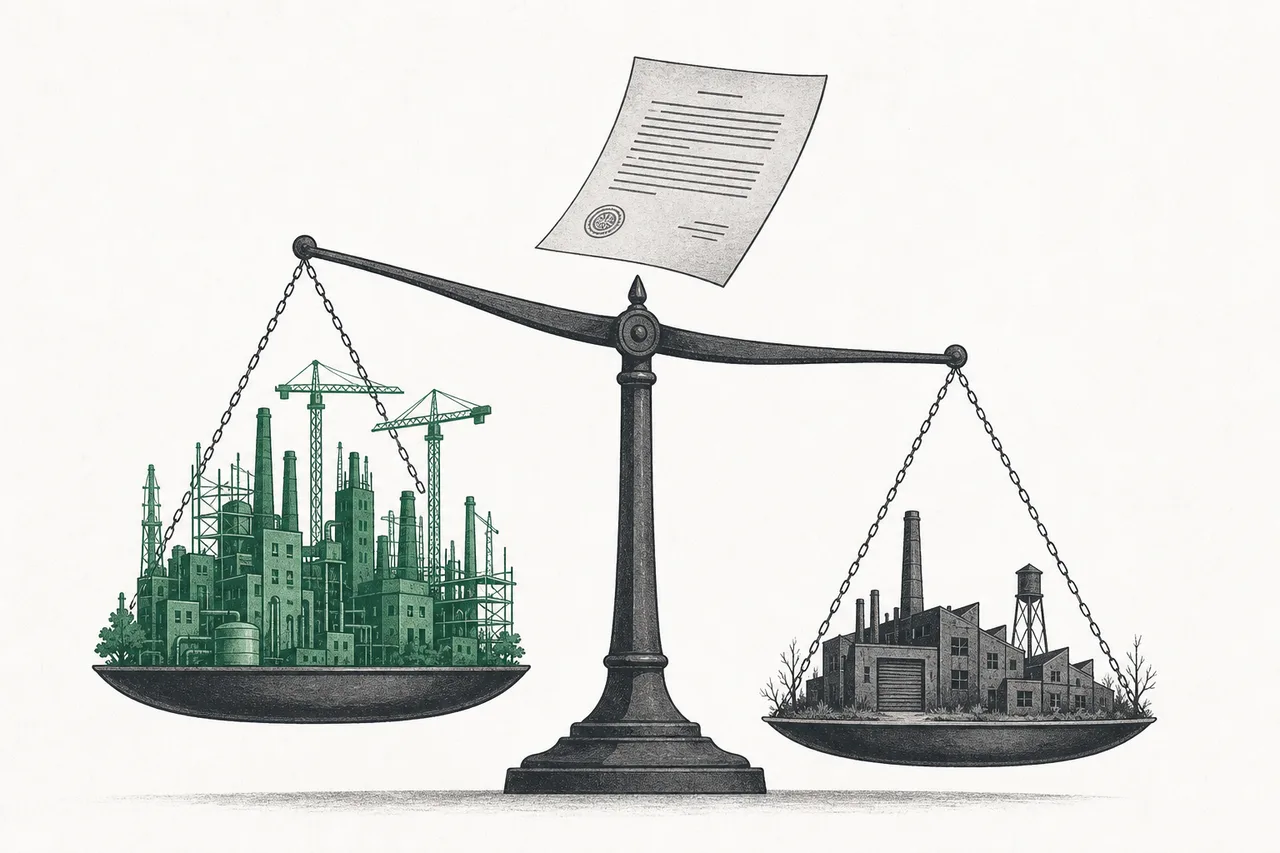
The second risk is international politics that cuts both ways. The BIOSECURE Act is good news for Lonza and Samsung but bad news for WuXi, and it throws the whole supply chain into turmoil. Drug companies that rely on WuXi have to find new manufacturers, which costs time and money. Moving biologics manufacturing isn't an overnight job — it all has to be re-certified from scratch. That makes this transition full of cost and uncertainty all the way through 2030.
The third risk is supply-chain dependence and competition that thins out margins in some areas. High-tech instruments need parts and key raw materials from around the world, which makes them vulnerable to trade wars and tariffs. On the CDMO side, several players pouring money into capacity expansion at once risks creating "overcapacity" a few years out — which would press on prices and margins, like it has in other industries where everyone built factories at the same time.
In short: this group is the quietest but most indispensable layer of pharma — every medical advance has to pass through the shovel-seller's hands first. Understand this layer clearly, and you understand why some companies that "don't sell a single drug" can make more money than famous drug companies, and why one US law can shake the world's entire drug-manufacturing chain.