Megatrend · Critical Materials
The two-faced metal: half of it sits in a vault, the other half sits on your roof
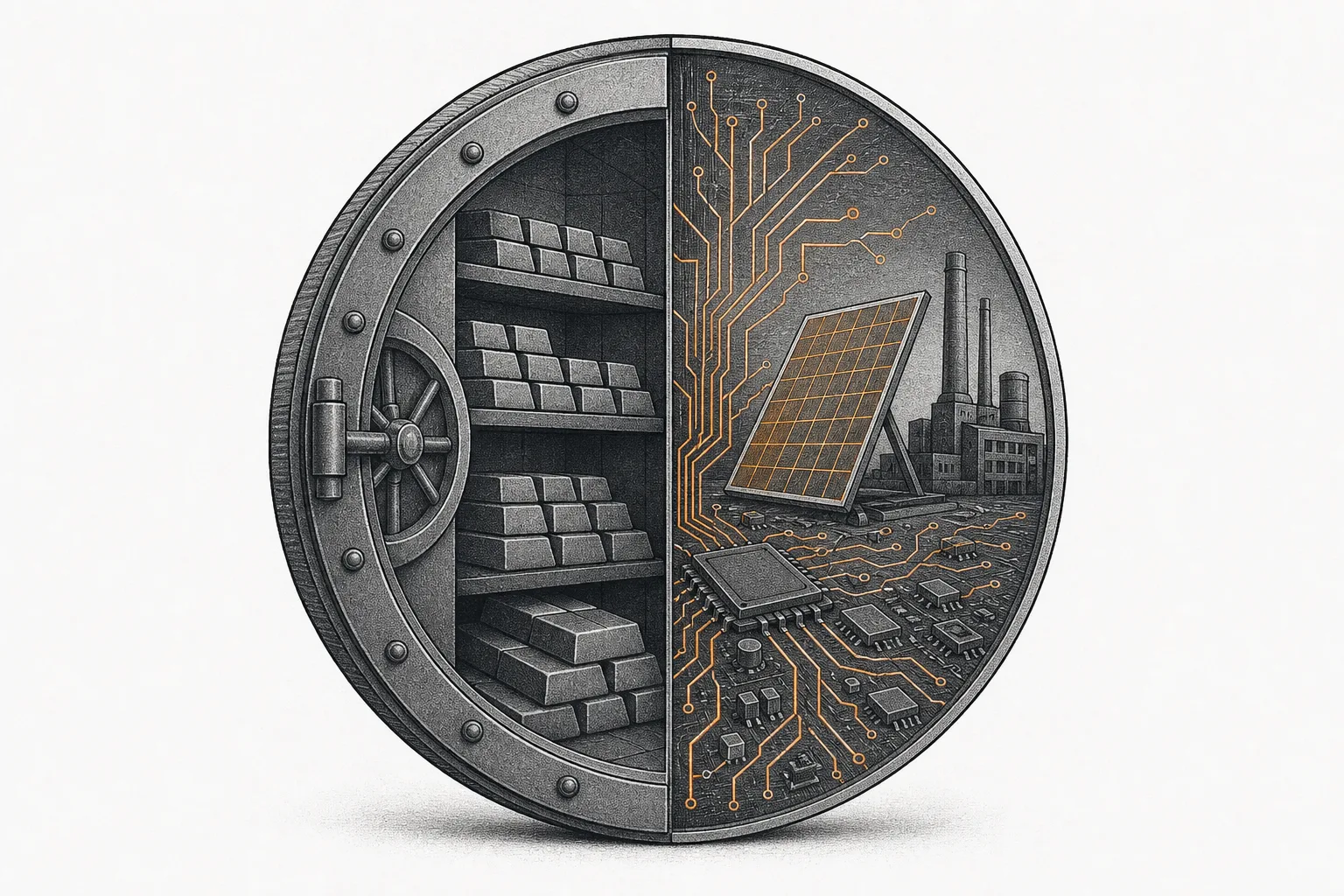
Most people file silver in the same drawer as gold — a precious metal you stash when the world gets shaky. But silver actually has a split personality, driven by two completely different forces. One side is a “safe haven” like gold, bought when people are afraid. The other is an “industrial metal” — the best electrical conductor in the world, embedded in every solar panel, in chips, in EVs, and in AI data centers. This is the story of a metal where over half the demand comes from factories, yet the price still jumps on fear — and right now it's in its fifth straight year of shortage, driving the price to a 45-year record.
01What it is (a two-faced metal)
Ask ten people “what is silver (the metal)” and nine will say it's a cheaper version of gold — a precious metal for jewelry, coins, something to keep when the economy turns bad. That answer is only half right, because what most people don't know is that over half of silver demand doesn't come from people wanting to store value at all — it comes from factories.
Silver is a metal with a split personality. The first side is exactly like gold — a “safe haven” people buy when they fear inflation, war, or that paper money will lose value. This side's price depends on interest rates, the dollar, and market mood, no different from gold.
But the second side is completely unlike gold. Silver is a genuine “industrial metal,” because it's the best conductor of electricity and heat of any metal — so it's embedded in the things we use every day: solar cells, circuit boards, chips, switches in cars, and connectors in data centers. Gold plays almost no such role (its industrial demand is only about 10%), but silver's is nearly 60%.
Safe haven = an asset people flee into when markets get volatile; its price is driven by “fear” and interest rates, like gold · Industrial metal = a metal whose price is driven by demand from real manufacturing, like copper or aluminum · What makes silver “strange” is that it's both at once — the only metal that fully straddles these two worlds.
On the megatrend map, silver is a single metal under Precious & Platinum-Group Metals within the Critical Materials & Supply Chain megatrend, with siblings gold (pure safe-haven side) and the PGM group (platinum-palladium, pure industrial side) — silver stands exactly in the middle between these two poles, and that's both its charm and its complexity.
02Why it matters (half of it belongs to factories)
The reason silver matters more and more in this era isn't that people want to wear more silver jewelry — it's that a world going electric and digital needs the best conductor, and silver is the champion conductor that no metal has yet dethroned at an affordable price.
The number that tells this story most clearly is the demand mix. In 2024, global silver demand was around 1,160 million ounces, and of that industrial demand set a new record of 680.5 million ounces — a record high for the fourth straight year, nearly 60% of the total. Jewelry, investment (coins/bars), and silverware split the rest.
Compared to gold, whose industrial demand is only about 10%, this difference changes everything — because it means silver's price doesn't depend on fear alone, but also on how many solar panels, EVs, and data centers the world builds. So silver gets a two-way boost gold doesn't have — and faces two-way risk gold doesn't have either.
03The two engines that drive the silver price
The easiest way to understand silver is to think of its price like a car with two engines that run independently. Sometimes both accelerate together (the price surges hard); sometimes one accelerates while the other brakes (the price gets confused). Knowing which engine is running right now is the key to understanding this metal.
The first engine is the “fear engine” — when interest rates fall, inflation runs high, or the world is full of uncertainty, people rush to buy silver as a safe haven, just like gold. This is the same engine that drives the gold price. The second engine is the “industrial engine” — solar, electronics, EVs, and data centers that have to buy silver for real factory use, whether the price rises or falls.
This explains why silver always “swings” harder than gold. On the way up, when both fear and industrial demand arrive together (as happened in 2025), the silver price surges several times harder than gold. But on the way down, when the economy slows and the industrial engine cuts out, silver falls harder than gold too — so silver is “gold on steroids,” both up and down.
04Silver and sunlight
To understand silver's “industrial engine,” you have to start with its single biggest chunk of demand — solar panels. Today, solar is the fastest-growing and largest industrial use of silver, and it's a beautiful example of one megatrend (clean energy) pulling demand from another (metals) directly.
The reason is pure physics. A solar panel turns light into electricity in a silicon cell, but that electricity has to be “collected out” through thin conductive lines printed on the cell's face — and the best conductor is silver. So makers use “silver paste” — silver mixed with glass and organics (about 85% silver by content) — printed as fine lines on the cell. One solar panel uses about 20 grams of silver. That sounds tiny, but when the world installs billions of panels a year, it becomes enormous demand.
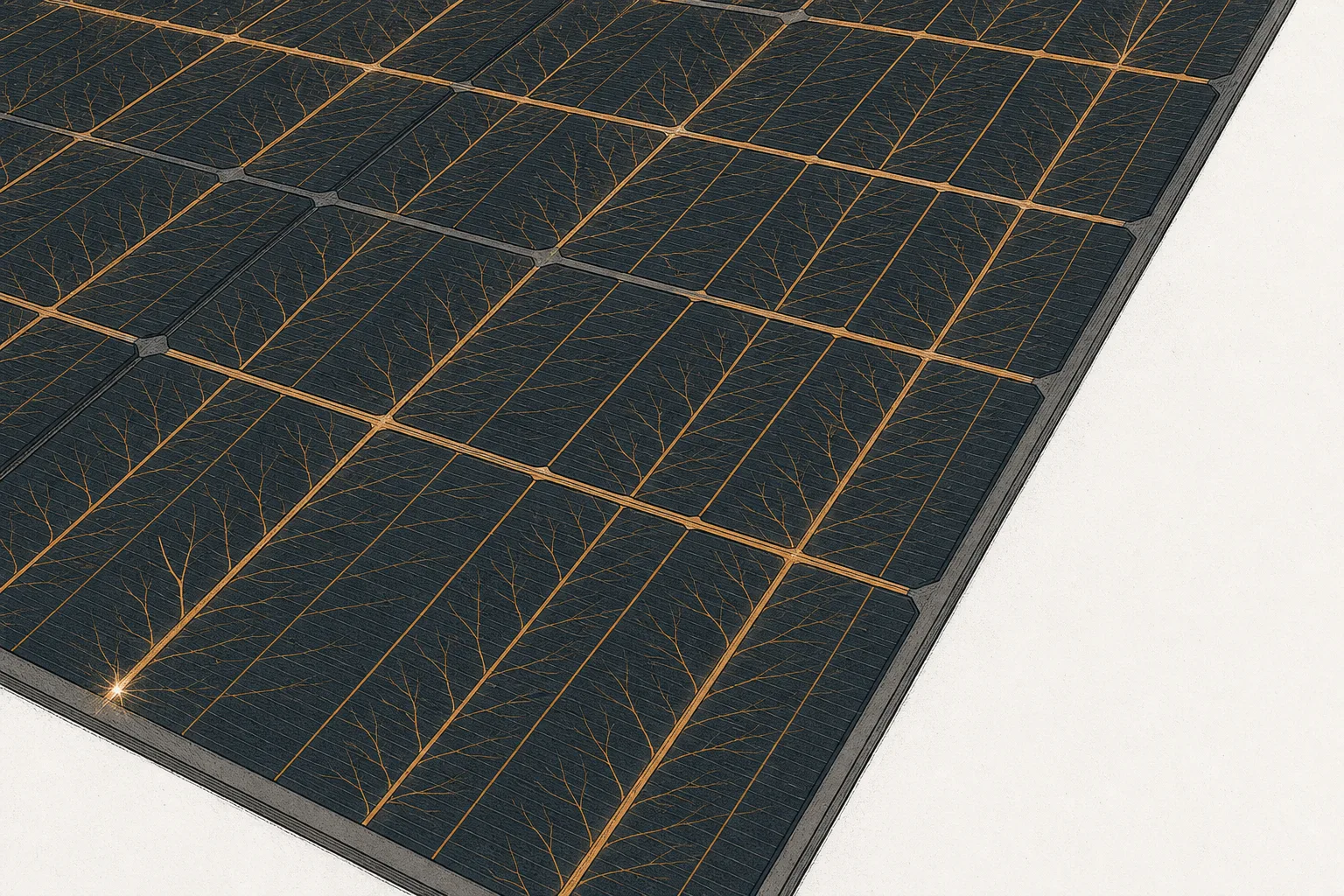
The result: solar's share of industrial silver demand grew by leaps, from about 11% in 2014 to nearly 30% in 2024. In 2025, solar alone consumed about 186.6 million ounces of silver — more than a full year of investment demand (coins/bars).
But there's a turning point to watch — as silver gets pricier, panel makers race to “reduce the silver per panel” (thrifting) with new cell technologies that use less silver. So even though the number of panels installed sets a record every year, PV silver demand is expected to fall about 19% in 2026 to roughly 151 million ounces. This is the “double edge” of industrial demand: it grows with the energy transition, true, but a too-high price also pushes people to find ways to use less of it.
In industry, whenever a material gets pricier, engineers find ways to “use less per unit” without losing performance — this is called thrifting. For silver in solar panels, it means designing thinner conductive lines, or partly switching to copper-plated alternatives. It's the natural counter-force that keeps demand in check when the price runs too high.
05What it connects to
Silver sits in one of the strangest positions on the whole megatrend map, because it's both a “material that feeds other trends” and a “financial asset that competes with other trends” at the same time.
As a material, silver supplies into nearly every trend of the era — into Energy Transition & Power Demand through solar panels, into Electrification & Mobility through switches and contacts in EVs, into Artificial Intelligence and Semiconductors through the connectors and circuit boards in data centers. The bigger these trends grow, the more they pull up industrial silver demand.
But as a financial asset, silver actually competes with other trends — especially Digital Finance & Tokenization. Silver and gold are the traditional “off-system safe havens,” while bitcoin is the new rival selling the same idea (fleeing paper money). Part of the money flowing into crypto is money that once flowed into precious metals — so the node's definition classifies this relationship as a “substitute.”
06Where it stands now
2025 was the year silver truly exploded, after lying quiet for a long time. The silver price broke $60/oz for the first time in history on December 9, 2025 — smashing the old record standing since the Hunt brothers era in 1980 and the 2011 crisis — then surged to a peak of around $80–84/oz late in the month before easing back. Over the full year silver rose about +150% — its best year since 1979.
But behind the surging price is something deeper — the silver market has run a structural deficit for the fifth straight year. Put simply, the world has used more silver than it mines and recycles for several years running. In 2024, total demand was about 1,160 million ounces, but total supply (mine + recycling) was about 1,010 million ounces, leaving a gap of about 149 million ounces. Add up 2021–2025 and the cumulative gap tops ~820 million ounces — nearly a full year's mine output.
Why can't supply keep up? The answer is a fact outsiders rarely know — most silver doesn't come from “silver mines.” About 72% of mined silver is just a “by-product” of mines set up to dig for other metals — lead-zinc, copper, and gold. Only about 28% comes from primary silver mines.
The effect of this structure is crucial: silver supply doesn't respond to the silver price. Even if silver doubles, a copper mine won't dig more, because silver is just a bonus — it digs according to the copper price. So when industrial demand surges, supply easily fails to keep up. This is the root of the chronic deficit. The world's main producers are concentrated in Mexico (#1, ~6,300 tons/year), China, and Peru.
In this arena, players split into two clear groups: primary silver mines that bet the whole company on the silver price, and streaming companies that buy rights to a share of silver from others' mines in advance, without mining it themselves.
07The road ahead
Silver's future is a tug-of-war between two forces inside the industrial engine. On one side is new demand that's growing — even as solar starts trimming silver per panel, demand from AI data centers and EVs is coming in to offset it. Silver is used in high-speed connectors, circuit boards, and the power delivery that AI increasingly needs.
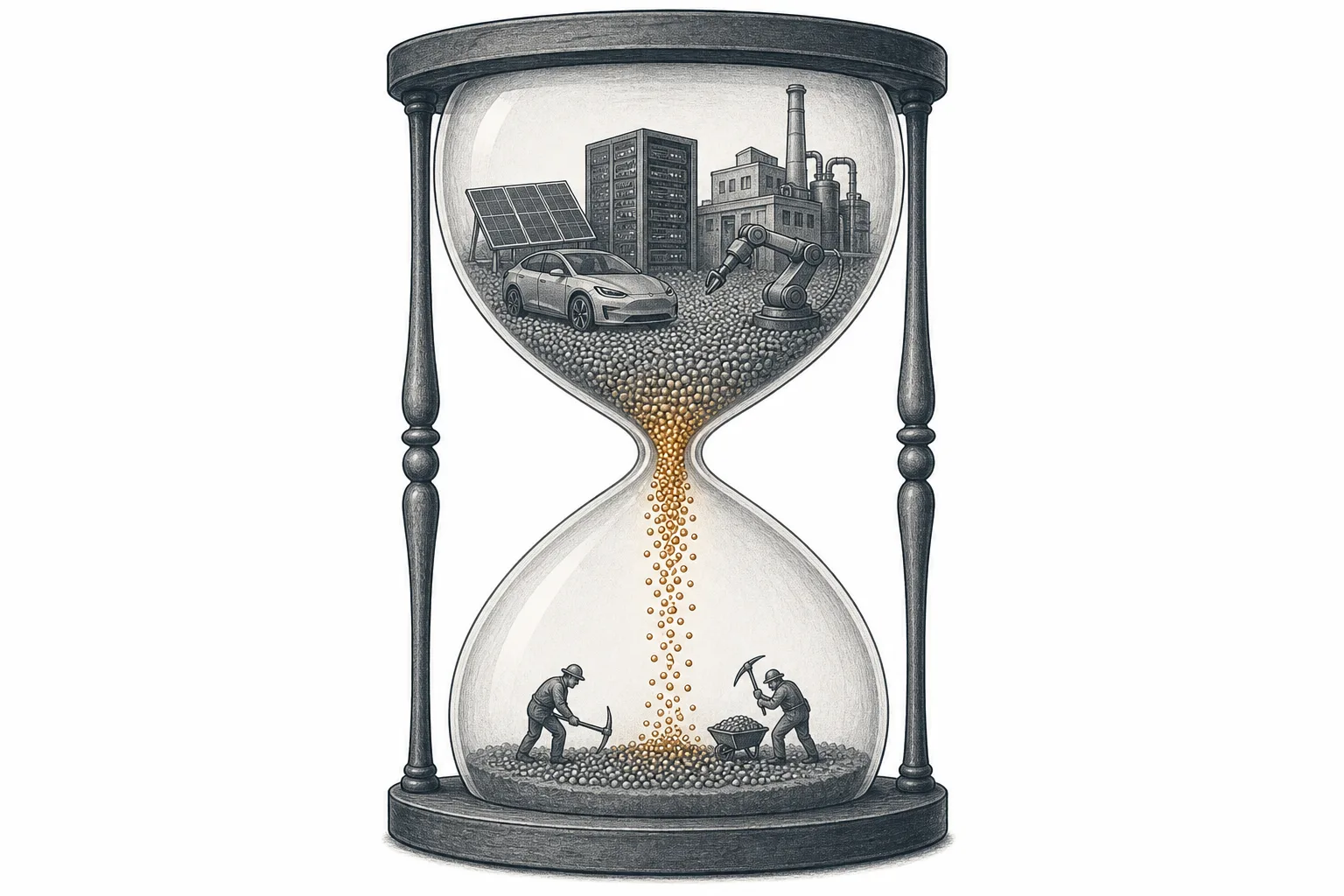
On the other side is resistance from the price itself. The pricier silver gets, the harder industry works to use less (thrifting) or substitute other metals in some jobs, like copper plating. This is the natural brake that keeps industrial demand from growing without limit. But in the short-to-medium term, almost every house agrees that the deficit will persist — the Silver Institute expects 2026 to be the sixth straight year of deficit.
As for the fear engine, as long as interest rates trend down, inflation smolders, and the world stays full of uncertainty, silver keeps getting the same tailwind as gold. In short, silver's future is bright structurally (shortage + new industrial demand), but the road will be bumpy, because the industrial engine always makes it swing harder than gold.
08Challenges & risks
Silver's “two-engine” charm comes with a risk gold doesn't have.
The first risk is far sharper volatility than gold, because silver's price is driven by both fear and the industrial cycle. When the global economy slows and industrial demand contracts (factories produce less), silver always falls harder than gold. History is full of periods where silver rose harder than gold on the way up, then dove deeper on the way down — those who buy silver at the peak of the good news usually get hurt the most.
The second risk is thrifting and substitution. A high price is an incentive for industry to redesign to use less silver, as seen in solar, where silver demand is expected to fall about 19% in 2026 even as panel installations set records. If copper-plating technology or substitute materials develop faster than expected, the industrial engine that was once a strength could weaken.
The third risk is supply that can't be controlled, because ~72% of silver is a bonus from other mines, so silver supply depends on “copper and zinc prices” more than the silver price itself. This is a double-edged sword: the good side is that the shortage doesn't ease easily even when prices surge (supporting the price), but the bad side is that if copper mines worldwide ramp up (chasing copper demand in the electric era), bonus silver could flood the market without anyone intending it.
In short: silver is the metal that teaches us some assets have more than one life. On one side it lies still in a vault like gold; on the other it works hard on rooftops, in cars, and in data centers worldwide. Understanding which “engine is driving” right now is the single most important key to understanding this two-faced metal.