Megatrend · Critical Materials
Separating the 17 hardest twins on the periodic table, then forging them into metal — the choke China turned into a weapon
In April 2025, China moved overnight to restrict exports of seven heavy rare-earth elements — and magnet plants, EV motors, and weapons production lines around the world began to stall. Not because the world is short of ore, but because there's "one step" almost everyone depends on China for: separating the jumbled mixed concentrate into pure single-element oxides, then reducing those oxides into finished metal. This is the deepest chokepoint in rare earths — chemistry that's dirty, expensive, and hard to copy, so much so that China controls about 90% of the separation and nearly 99% of heavy rare-earth separation. This is a story about hundreds of chemical tanks, not a mine pit.
01What it is (separation + reduction to metal)
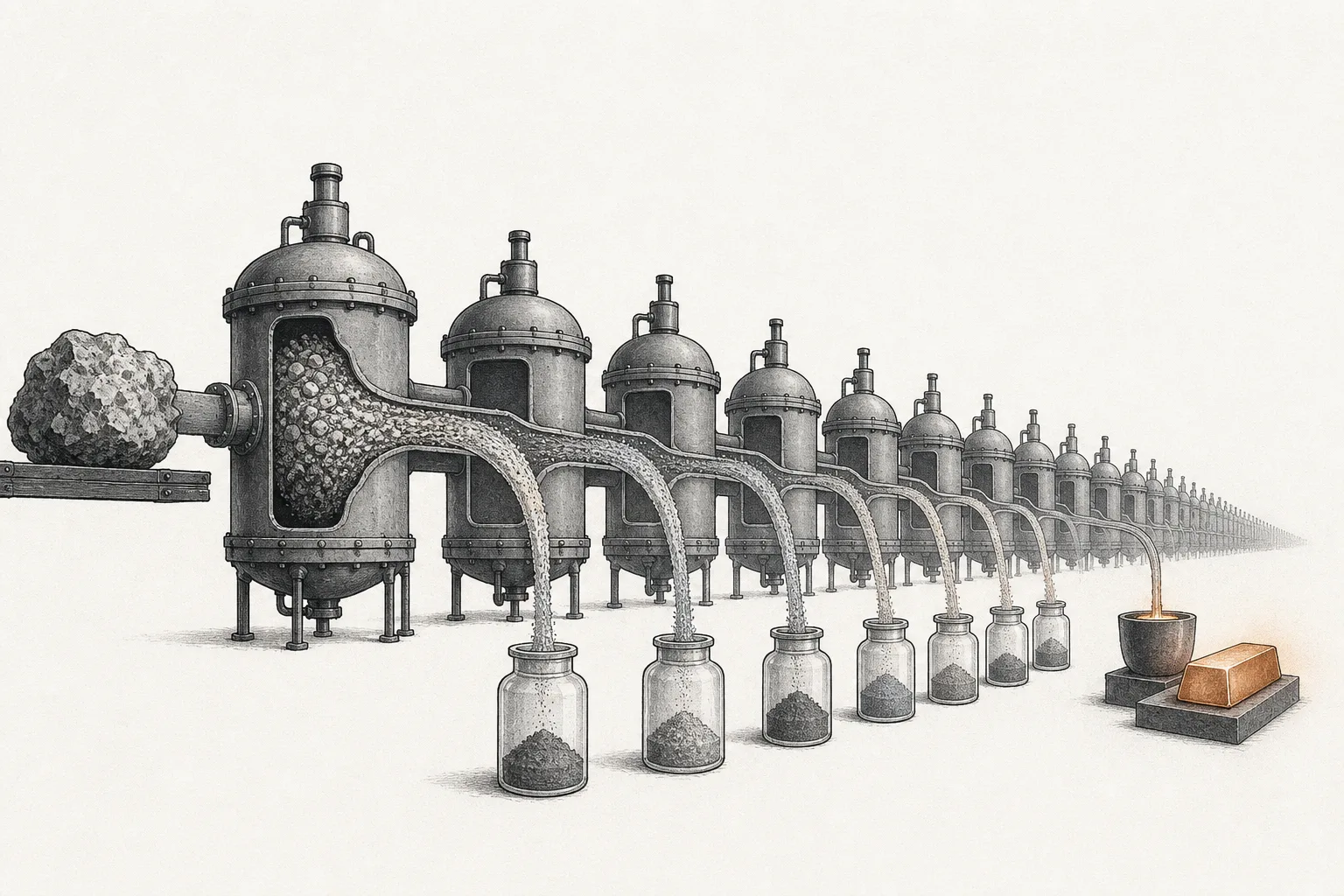
Picture the rare earths dug out of the ground not as single elements, but like "17 kinds of candy melted together into one lump." In a single batch of concentrate, all 17 rare-earth elements are mixed together — the expensive, valuable ones (neodymium, dysprosium, terbium) jumbled up with ones almost nobody uses. The problem is that they have such similar chemistry that they're the hardest elements on the periodic table to separate. This step is the one that does the two hardest jobs in the chain: (1) separating that mixed lump into single-element oxides at 99.9% purity, then (2) reducing those oxides into metal (turning Nd₂O₃ powder into neodymium metal ingots, for example), ready to hand off to the magnet makers.
On our megatrend map, this step is the "midstream" of rare earths. It's a sub-branch of Rare Earths & Permanent Magnets, under the Critical Materials & Supply Chain megatrend, and it sits right in the "middle" — upstream is mining and concentrate, which feeds it the "mixed lump," and downstream is magnets, metals, and alloys, which takes the pure metal and forges it into NdFeB magnets. If the mining step is "finding ore in the ground" and the magnet step is "forging the sword," this step is the one that sifts the pure iron out of the raw ore and melts it into bars for the swordsmith — the step people overlook, but the hardest and most powerful.
Solvent extraction = the main way to pull rare-earth elements apart one at a time, by running a solution through a long chain of connected chemical tanks · Mixer-settler = one tank in that chain, which mixes the chemicals then lets them separate into layers; you need hundreds linked together to get a pure separation · Reduction (reducing oxide to metal) = the step that turns "oxide powder" into "metal" using electricity or intense heat — because magnets are made of metal, not powder.
The key thing to remember from the start: the value and the power aren't in the "mining" — they're in the "separating and turning it into metal." Mining rare earths isn't that different from any other mine; plenty of countries can do it. But converting the mixed lump into clean single-element oxides, then reducing those into ready-to-use metal, is chemistry that's hard, expensive, dirty, and that very few can actually pull off at industrial scale — and that's what this whole lesson is about.
02Why the real chokepoint is "separation," not "mining"
Here's what most people miss: the usual assumption is that China controls rare earths because it "has lots of mines" — that's only half true. China mines about 70% of the world's rare earths, which is a lot, but that isn't what really locks everyone else out. The lock is the separation/refining/metal-making step, where China controls about 90% of the world — and for heavy rare earths specifically (dysprosium and terbium, essential for heat-resistant motors), China controls nearly 99%. Put simply: even if the US or Australia mines its own ore, most of that concentrate still has to be shipped to China to be "separated and reduced" anyway.
Why does this shake the world? Because the end product of this step is the NdFeB permanent magnet — a small part that sits inside almost everything that needs to "turn electricity into motion" powerfully and precisely: EV motors, wind turbines, robot joints, hard drives in AI data centers, drone rotors, and missile guidance systems. Without the pure metal that comes out of this step, there are no magnets, and without magnets, the multi-trillion-dollar tower above it wobbles instantly. The rare-earth market itself may look small (around $4 billion in 2024, projected to reach ~$6.3 billion by 2030), but the "things that depend on it" are worth trillions — which is why this tiny step carries enormous bargaining power.
03How it works — separating the 17 twins, then forging them into metal
To see why this step is such a high wall, let's follow the "mixed lump" one step at a time, from concentrate all the way to a pure metal bar.
The heart of the difficulty is step 2 — solvent extraction. The problem is that all 17 rare-earth elements have very similar chemistry (their ion sizes differ by only a hair). To pull them out one at a time in pure form, you have to run the solution through a chain of 200–400 mixer-settler tanks, each using a special extractant (like P507 or D2EHPA) to pull the target element out bit by bit, gradually working toward purity. The precision required is brutal — a slightly off pH or concentration ruins the separation down the whole line, so it has to be monitored and adjusted 24 hours a day. This is the "hard-to-copy know-how" China has been building for decades.
But the work isn't done at oxide powder, because magnets use "metal," not "powder." So step 4 has to reduce the oxide into metal (reduction). The main method is molten-salt electrolysis — dissolving Nd₂O₃ powder in a fluoride-salt bath heated to around 1,000°C, then running current through it so neodymium metal separates out as a solid. This step burns enormous power and produces waste, and China is also the world's largest producer of rare-earth metals and alloys (about 90% again). That means China controls both the "separation" and the "metal-making" — the two hardest steps, back to back.
P507 / D2EHPA = organic extractants used in the separation tanks; each one "prefers" slightly different elements, so they're used to pull the target element out step by step — and these very chemicals were caught in China's 2025 export controls · Molten-salt electrolysis = the method for turning oxide into metal, by dissolving it in a hot salt bath and using electricity to draw the metal out; it's China's main method for producing light rare-earth metals.
The West fell behind not because it lacks ore — but because separation and reduction are dirty and expensive. They generate huge amounts of chemical and radioactive waste. The West used to have its own separation plants but shut them down one by one 20–30 years ago, unable to compete with China on price and facing environmental pushback. Building a new plant isn't cheap either — a separation plant of ~10,000 tons/year alone runs about $300 million, and a fully integrated one that goes all the way to metal can reach $800 million per project.
04How it connects in the ecosystem
This step is the "midstream tap" of rare earths — it takes material from upstream, makes it usable, and passes it on. If it stalls, the shock travels both ways.
- Takes concentrate from Mining & Concentrate (its upstream sibling): upstream mines the ore and turns it into a "mixed concentrate" that it sends here to be separated — inseparable partners, but different jobs. Upstream is good at "finding ore," this step is good at "separating and making metal."
- Feeds metal to Magnets, Metals & Alloys (the next step): this is the main customer. The Nd/Pr/Dy metal that leaves this step gets blended into alloy and formed into NdFeB magnets — upstream, midstream, downstream all link into one line that breaks entirely if any link snaps.
- There's a parallel "shortcut" — Rare-Earth Recycling: pulling Nd/Dy back out of old magnets (urban mining) is another way to get rare earths without going through a mine — and it often uses a similar "separation" step, so this step and recycling share the same body of chemistry know-how.
- It's a security "fragile point": the oxides and metals from this step are the raw materials of fighter jets, missiles, and radar. That's why, when China restricted heavy rare-earth exports, the world of defense and geopolitics shook instantly.
- It's the lifeblood of the new demand wave: metal from this step flows on into magnets in EV motors, clean-energy turbine blades, robot joints, and AI data center hardware — the more these trends grow, the more the demand running through this step grows with them.
05Where it stands now
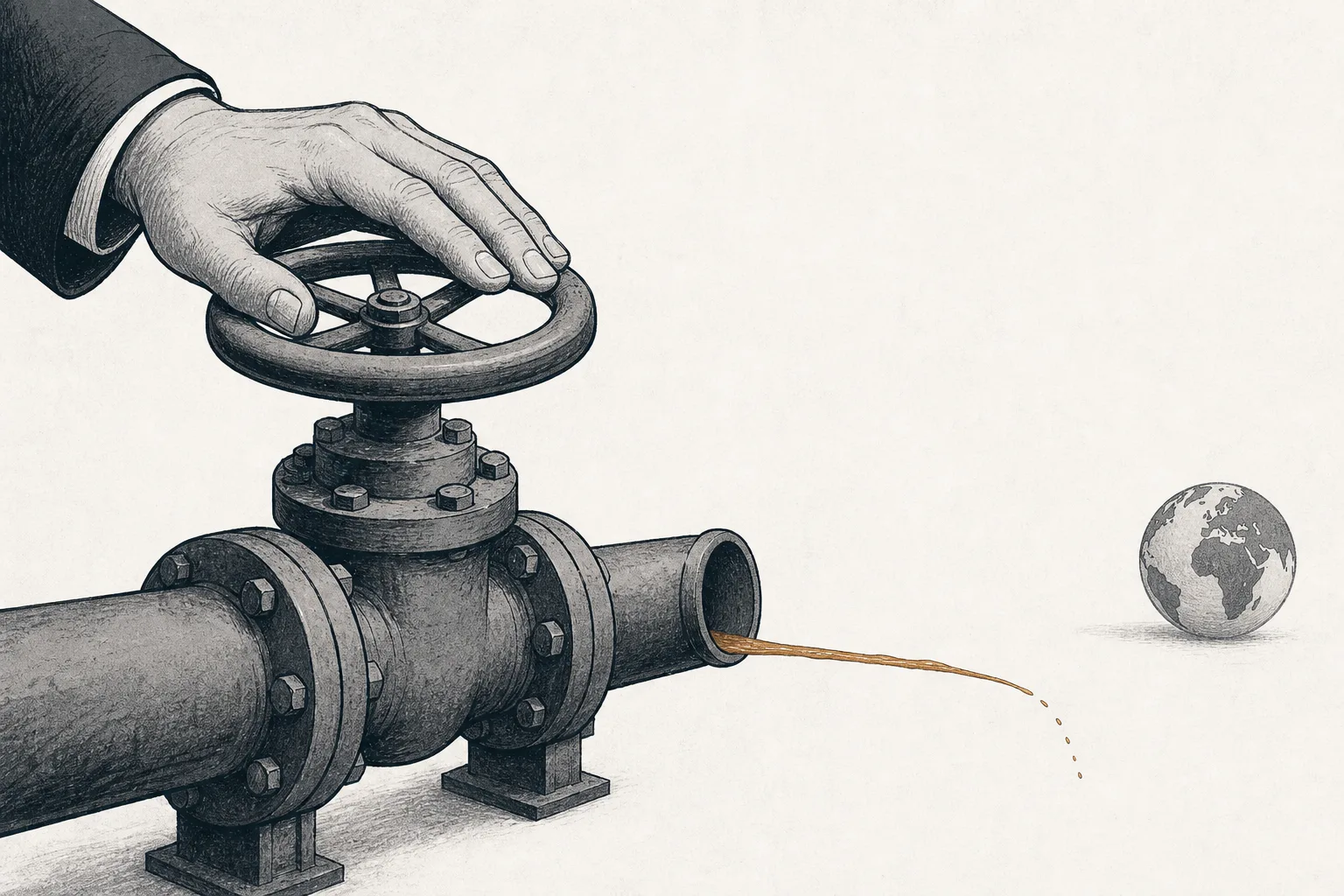
2025 was the year this midstream step became a full-blown "weapon." On April 4, 2025, China announced export controls on seven heavy rare-earth elements (including dysprosium, terbium, yttrium), along with related metals, compounds, and magnets. Anyone exporting had to get a license and declare the end user. Then on October 9, 2025, China widened it again — adding five more elements and, more importantly, controlling the "technology" for separation, metal reduction, and magnet-making too, including a ban on exporting the know-how and the experts — effectively slamming the door on anyone copying the process. Then in November 2025, China announced it would "suspend" the October round for a year, but the April controls on heavy rare earths remain in force.
The impact shows up most clearly in "prices outside China," because the controls split the world into two prices — inside China prices stayed flat, but the export (FOB) price jumped as material got scarcer and a "security premium" got added on top. In early 2026 NdPr oxide climbed from around $53/kg to $100–125/kg, and the heavies were even more brutal: dysprosium metal hit around $930/kg and terbium metal around $4,030/kg by mid-2026 (each up more than 100% in six months).
On the Chinese side, the real market leader is China Northern Rare Earth, the world's largest producer by volume, holding about a 40% global share. Its base is the Bayan Obo mine in Inner Mongolia (the world's largest single rare-earth deposit), which feeds light rare earths (Nd/Pr) to its separation plants nonstop. The other is Shenghe Resources, which acts as a "middleman" connecting non-China mines to China's separation capacity.
Outside China, the most important development is building your own "separation and metal-making" capability, not just mining — Lynas (Australian, with a separation plant in Malaysia) became the first heavy rare-earth producer outside China, starting dysprosium production in May 2025, followed by terbium. And MP Materials (US) signed a landmark deal with the US Department of Defense in July 2025 — the government guaranteed an NdPr price floor of $110/kg for 10 years, took an equity stake, and backed an expansion of magnet capacity from 3,000 to 10,000 tons, while MP stopped selling to China from mid-2025 to build a fully Western chain.
06The road ahead
The first and clearest direction is building state-backed "separation and metal-reduction lines" outside China. The world has learned that mining alone helps nothing if you still have to ship the material to China to separate it. Separation capacity outside China is still under 15% of the world, so projects are springing up everywhere: Lynas is expanding its heavy line in Malaysia, MP is running separation and metal-making at Mountain Pass, Neo Performance has started producing heavy rare-earth oxides at its Silmet plant in Estonia (Europe's first), and several governments are pouring billion-dollar loans into domestic separation plants.
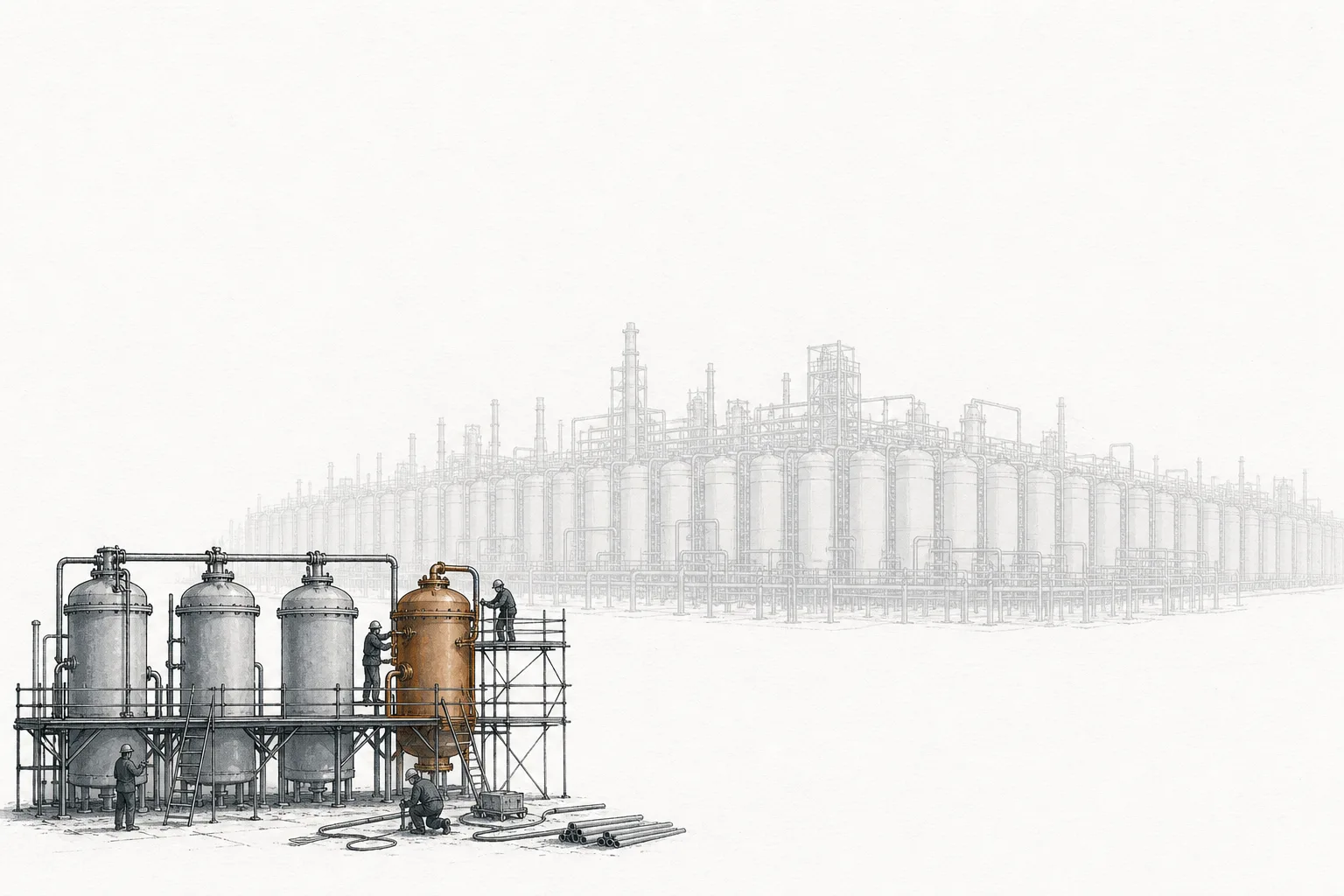
The second direction is chasing the heavy rare earths (Dy/Tb) and the metal step in particular, because this is where China controls nearly 99% and the West is most fragile. A few players can now separate the oxides, but the "reduce oxide to metal" step is even more concentrated in China. Whoever can close the metal gap outside China first holds the rarest card in the chain. Japan's Shin-Etsu is also playing a quiet game — separating and refining in Vietnam and planning a reduction plant in Japan to cut its reliance on China.
The third direction is new separation and reduction technologies that try to break out of conventional solvent extraction — like separation methods with fewer, cleaner steps, or metal reduction that uses less power and emits no greenhouse gases. If they work commercially, they'd cut costs, pollution, and the "knowledge wall" China holds. But most are still at the research or pilot stage, not industrial scale.
07Challenges & risks
This midstream step is a business where "end demand is a sure thing to grow, but the supply side is full of traps."
The first risk is China dumping prices. This is a classic weapon China has used before — when a rival outside China starts building a separation plant, China can open the production tap until oxide and metal prices crash, leaving the higher-cost new project "in the red before it can even grow up." This market is small and thin; prices can swing several-fold in a few months — which is why a deal like MP–US DoD has to guarantee a price floor ($110/kg) to keep producers outside China alive.
The second risk is environment and radioactivity. Leaching, separation, and reduction generate huge amounts of chemical waste, and some deposits carry radioactive thorium/uranium that has to be disposed of safely. Environmental permits in the West take a long time and face community opposition — one reason the West shut its separation plants down in the past, and a gate every new project has to clear.
The third risk is time, capital, and the "metal" step that's harder to copy. Announcing a separation plant is easy, but getting it running with good yield, producing 99.9%-pure oxide and then actually reducing it into metal, takes decades of accumulated know-how that China has and the West threw away. Many estimate the West needs about a decade and billions of dollars per project to close this gap — and in the meantime, the world still depends on China.
In short: this step is the midstream heart of rare earths — separating the mixed lump into single-element oxides, then reducing them into magnet-ready metal. And the counterintuitive truth is that the hard, powerful work isn't in the mine pit, but in hundreds of chemical tanks and reduction furnaces that pull the 17 twins apart one at a time. That's the chokepoint China spent decades building, until it became one of the most powerful bargaining cards of the energy-transition and geopolitical-competition era.